Black Canyon Fire

Sanpete County, Utah · Wildfire

Contained Official numbers updated Sep 9, 2026 (4 days ago)
First reported about 7 weeks ago
Metric Now
Size
3,264 acres
Sep 14, 1:00 AM
−307 acres
was 3,571 acres · Aug 19, 6:00 PM
Containment
100%
Sep 14, 1:00 AM
+5 percent
was 95% · Sep 8, 6:00 PM
Crew size
26
Sep 14, 1:00 AM
−1
was 27 · Sep 8, 6:00 PM
Money spent
$20.7M
Sep 14, 1:00 AM
+$880,526
was $19.8M · Sep 7, 6:00 PM

Black Canyon Fire and other nearby fires

🔥 Where this fire started Mostly contained Partly contained Containment not reported

Drag or zoom the map to see more fires in the area.

Black Canyon Fire summary

The Black Canyon Fire is a wildfire near Sanpete County, Utah. It has burned about 3,264 acres (about 2,000 football fields). Crews have it fully contained, with a line all the way around it. It was first reported about 7 weeks ago. About 26 people are on it, run by a Type 4 IC. We're also tracking 3 other active fires within about 75 miles.

Size
3,264 acres
Containment
100%
Discovered
July 30, 2026 (first reported about 7 weeks ago)
Cause
Not reported

The size and containment above are current as of Monday, September 14th at 1:00 a.m. CDT.

Free · No email needed · Results in seconds

Worried About Your Home's Fire Risk? Get Your Free Instant Fire Danger Report.

Enter your address to get a free wildfire report based on official government data. See every real wildfire near your house, whether a fire warning is active right now, what's around your house from above, and how your area compares to the rest of the country.

No email needed. Your report shows up right on this page. We do not share your address.

Weather & fire-spread conditions

No Red Flag Warning. The National Weather Service hasn't flagged this area for dangerous fire-spread conditions right now.

Hot, dry, and windy weather can help a fire grow; cool, calm, or wet weather helps crews. The tags below rate each day for fire spread — green is calm, red can push a fire.

A general fire-weather guide (wind matters most, then how dry it is, then heat), not a prediction of what this fire will do.

Tonight

41°F · Chance Rain Showers

Wind 21 to 24 mph WSW · 25% chance of rain

Wind: Windy Heat: Cool Some rain

Monday

63°F · Sunny

Wind 10 mph W · 2% chance of rain

Wind: Breezy Heat: Cool Dry

Monday Night

41°F · Mostly Clear

Wind 3 to 9 mph WNW · 2% chance of rain

Wind: Calm Heat: Cool Dry

Tuesday

63°F · Mostly Sunny then Chance Showers And Thunderstorms

Wind 5 to 9 mph SSW · 38% chance of rain

Wind: Calm Heat: Cool Some rain

Tuesday Night

41°F · Chance Showers And Thunderstorms then Partly Cloudy

Wind 7 mph SW · 27% chance of rain

Wind: Calm Heat: Cool Some rain

Forecast from the National Weather Service (weather.gov), pulled Monday, September 14th at 1:01 a.m. CDT.

Could this fire move fast?

Weather isn't the only thing that changes how a fire moves. The ground matters too: how steep it is, and what's growing on it. These four numbers are for the exact spot where this fire started, not the whole fire. A big fire crosses a lot of different ground.

10° slope

Fire usually moves faster uphill than downhill. Heat and flame lean uphill, drying out the ground above the fire before it gets there.

Trees with brush underneath (TU5)

Heavy forest litter with shrubs or small trees underneath, in a dry climate. Fire moves at a moderate pace, with medium-height flames.

55% tree canopy cover

The more tree cover above a fire, the easier it is for the fire to climb from the ground into the treetops. That's called a crown fire. Crown fires move faster, throw embers farther ahead of the fire, and are harder for crews to stop head-on.

8,805 ft elevation

Elevation by itself doesn't make a fire more or less dangerous. But it shapes the other three numbers here: what grows there, how dry things get, and what the weather does.

Elevation and slope from the USGS 3D Elevation Program; fuel type and canopy cover from LANDFIRE (USGS and U.S. Forest Service), pulled Thursday, September 10th at 3:48 p.m. CDT.

Who's on it

About 26 people are assigned to this fire, run by a Type 4 IC. The government rates it a Type 3 Incident. About $21 million has been spent on it so far.

The official feed reports the total headcount, not a breakdown by crew type.

Where to get live updates

We show the daily official picture. For minute-by-minute updates, evacuation orders, and maps, these do it best:

Nearby fires to Black Canyon Fire

Within about 75 miles we're tracking 3 other active fires, closest first:

See all active fires in Utah →

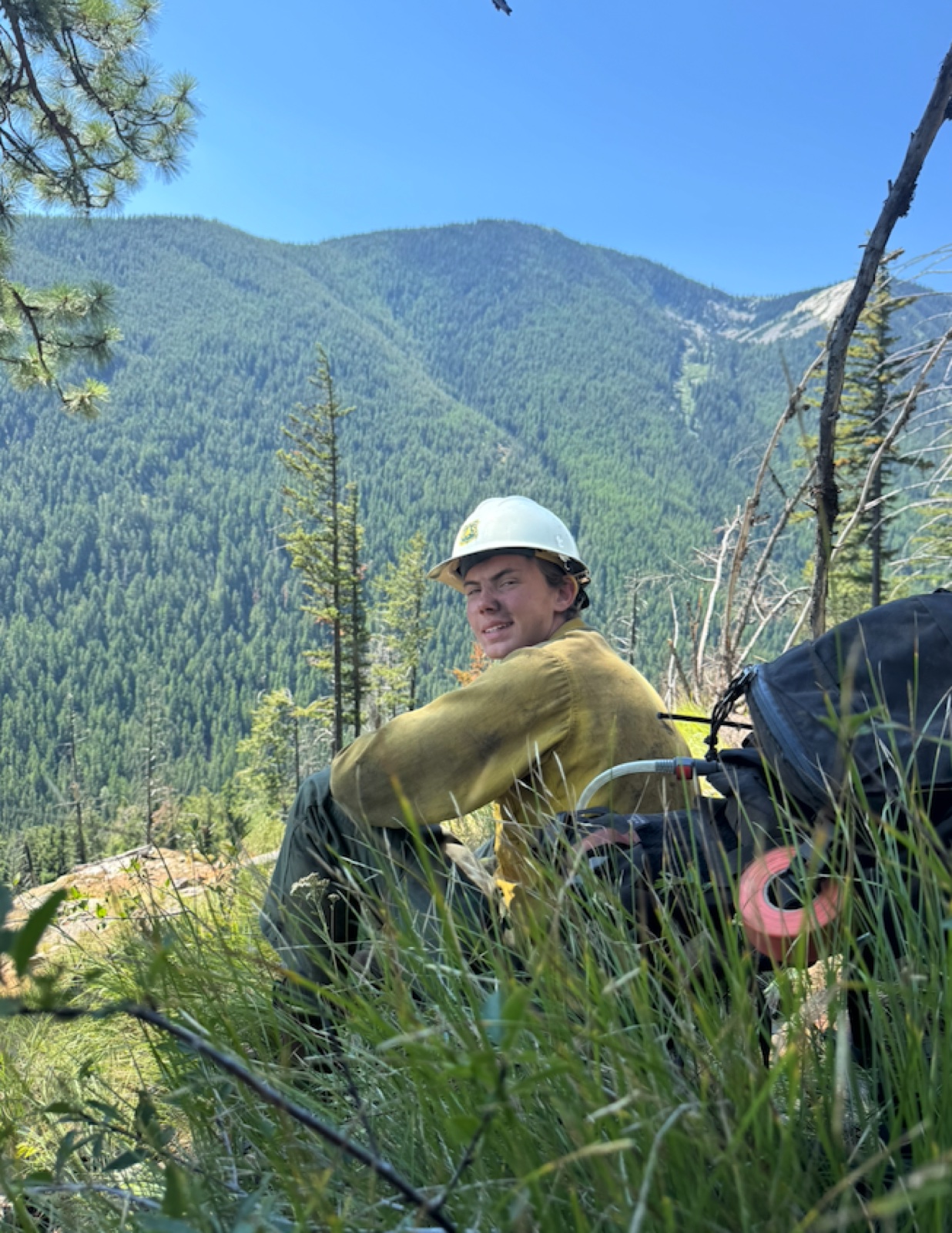
A wildland firefighter in a white helmet and yellow shirt sits on a grassy slope above a forested mountain valley

The guy who wrote this site, on a break. Summer 2026.

Wildland firefighting is a great job for the right person.

No college. No experience needed. You learn on the job.

Who fits:

Jobs in all 50 states, most of them out West. Most crews hire in fall and winter for the next summer. Utah has 37 open right now, 3 for beginners. See them.

Know someone who fits?

Send them a link to woodlandfirefighter.com. It explains the job and how to get hired.

Want to talk to a real wildland firefighter?

I spent summer 2026 on a Forest Service crew in Montana. Happy to answer any questions. 30-minute call, $37.

Book a 30-minute call

Drop your email. Get the free guide.

Inside: the pay breakdown, a resume template, a training plan for the fitness (pack) test, and the hiring timeline.

100% free. No spam. Unsubscribe anytime.