From the fire line
Can a Wildland Firefighter Make Money on the Side? What I Learned About the Rules
Yes, a federal wildland firefighter can make money on the side. There's one catch, and I'll put it first: while you're still getting a government paycheck, you can't take outside pay for writing or speaking that's tied to your job. The simple fix is to sell that kind of thing after the season ends. Everything else — posting, building an audience, running a free newsletter, taking photos — is fine right now.
My son Graham started this summer as a first-year wildland firefighter in Montana. People kept asking the same thing: he works for the government and runs a website about it, so is that even allowed? So I went and read the actual regulations. Here's what they say, in plain English, with each one quoted and linked so you can check it yourself.
One thing up front, and I'll say it again at the end: I'm not a lawyer, and this is only what I found. The safe move is to ask your own agency's ethics official before you start anything. But "go ask someone" is a useless answer on its own, so let me give you the real stuff first.
The rules at a glance
- You can do most of it right now. Post, build an audience, run a free newsletter, take photos — on your own time, speaking for yourself.
- You can't get paid for job-related writing or speaking while you're employed. That's the big one. Wait until after the season to sell anything tied to the job.
- Never use your title or badge to sell, lean on inside information, or work on the clock. There's no way around these.
- Most seasonal firefighters don't need permission first — but it's a one-minute question for HR.
Here are the details, rule by rule.
The big rule: you can write and post, you just can't get paid for it during the season
This is the rule everybody trips on, so I want to be careful with it. It's called 5 CFR 2635.807. Here's the actual rule:
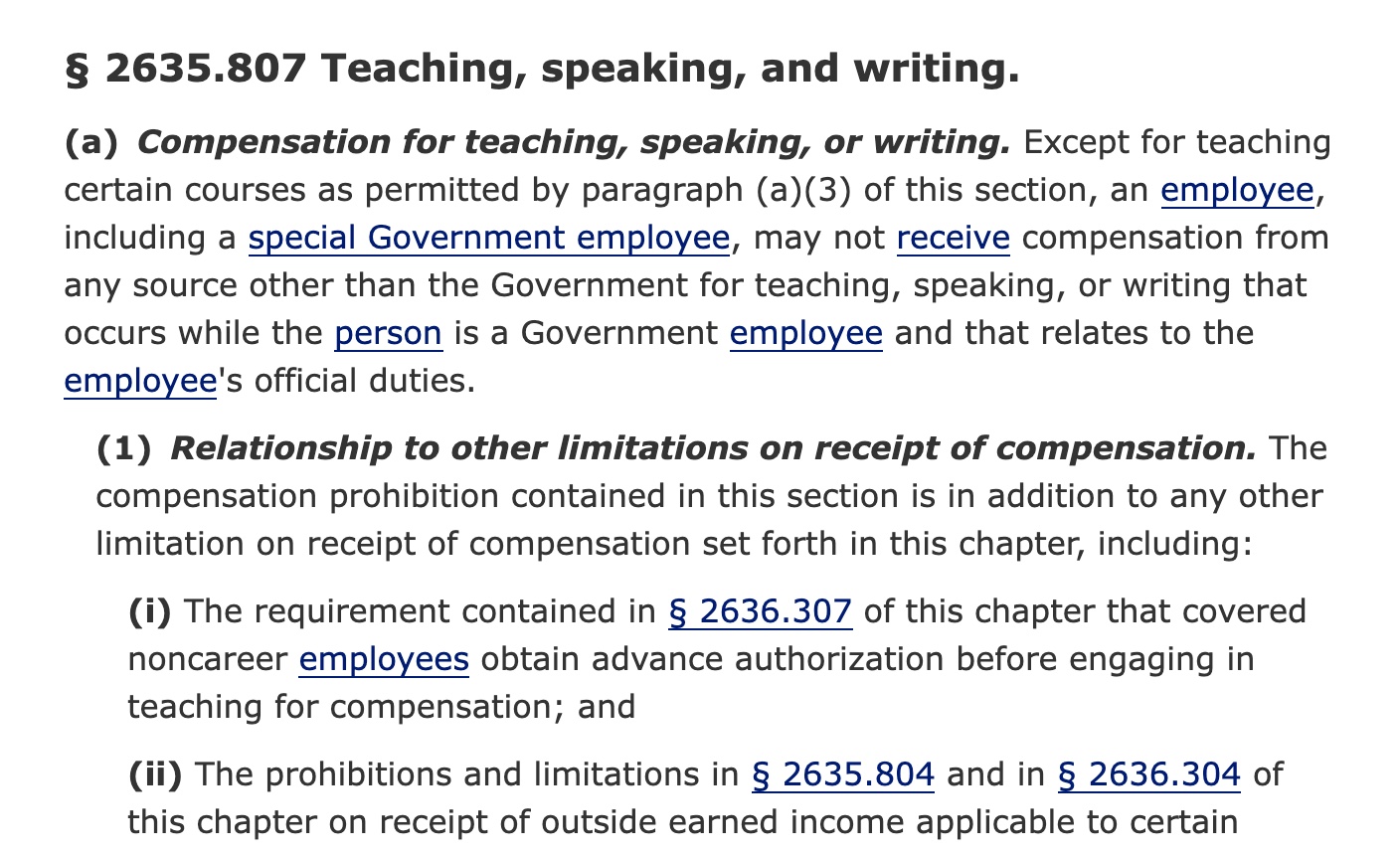
Read it slowly and you'll see it only bites when two things are true at the same time:
- The person is getting a government paycheck at the time, and
- The writing or speaking is tied to their government job.
Both have to be true at once — if only one is, the rule doesn't apply. Writing or speaking about wildland fire is fine on its own. The rule only blocks getting paid for it, while employed, on a topic tied to the job.
And "tied to the job" is broader than you'd guess. It can cover anything that touches a program the agency runs. The Forest Service runs the whole wildland-fire hiring program — so a paid "how to get hired as a wildland firefighter" guide, sold while Graham is still on the payroll, could count. That's the risk, and I'm not going to pretend it isn't there.
Here's the relief: this rule only applies while you're a government employee. The day the season ends and Graham is off the payroll, 2635.807 stops applying to him. So the simple, no-drama move is to sell the paid stuff after the season.
Don't use the government job to sell stuff
The next one is 5 CFR 2635.702. Here's the actual rule:
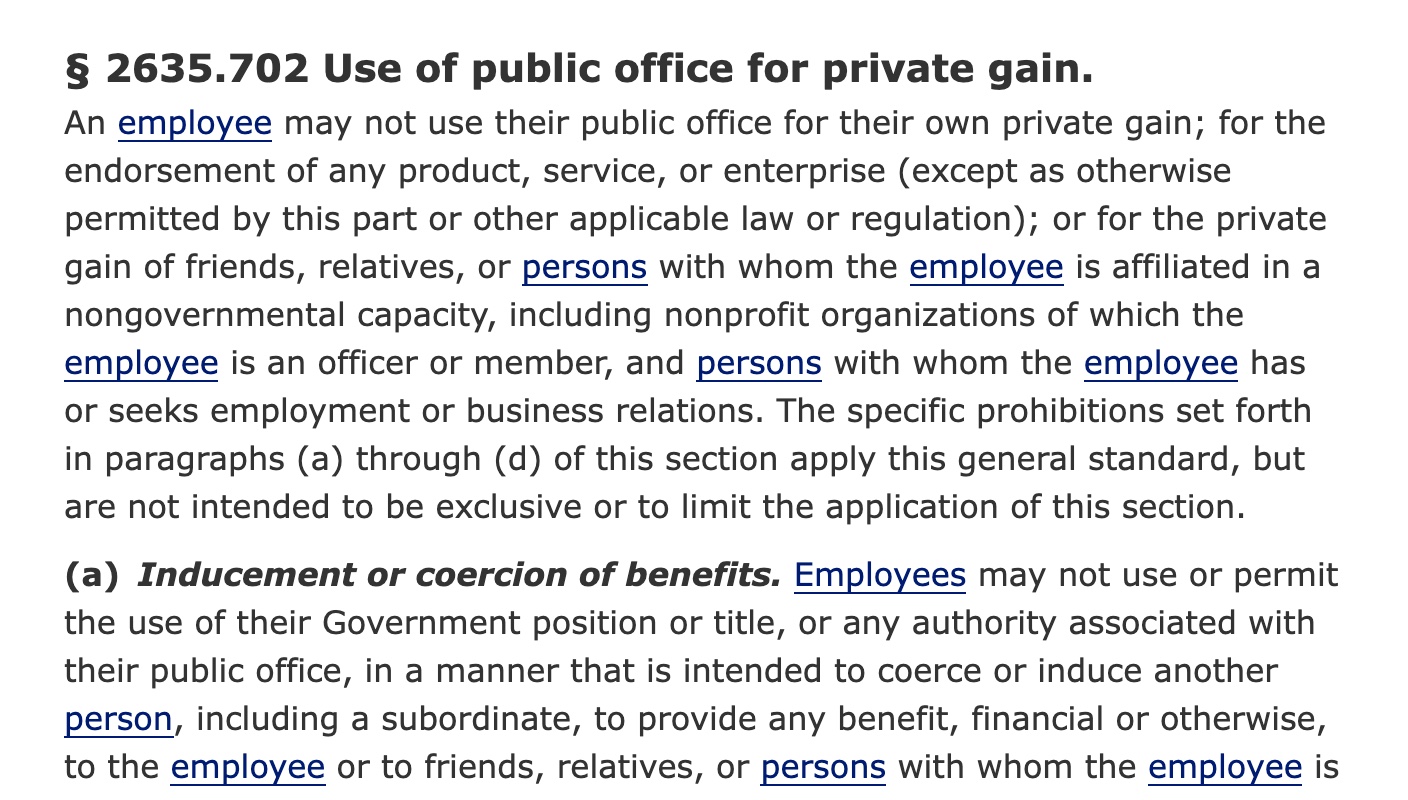
In plain English: you can't use the government job, title, or authority to make money. And you can't make it look like the agency backs your personal stuff. Graham can talk about what the work is like all day. What he can't do is use the official title as the sales hook — "buy my guide, written by a U.S. Forest Service firefighter." That's using the job for private gain. Being a firefighter and talking honestly about it is one thing. Waving the official title around to get people to trust their wallet is another.
Only use information anybody can already look up
5 CFR 2635.703. The text:
"Employees may not engage in financial transactions using nonpublic information, nor allow the improper use of nonpublic information to further their own private interests or those of another ..."
For us this is easy. Everything useful in a guide is already public — the job postings on USAJOBS, the national firefighting standards, the pack test, the age rules, the pay. Anybody can look it up, so a guide built only on public information is on solid ground. The line you don't cross is taking some inside thing you only know because of the job and turning it into money.
Do it on your own time, with your own phone and laptop
This one is common sense, but it's written down too. Two rules cover it. First, on government property:
"Employees have a duty to protect and conserve Government property and may not use such property, or allow its use, for other than authorized purposes."
And on government time:
"Unless authorized in accordance with law or regulations to use such time for other purposes, employees must use official time in an honest effort to perform official duties."
So anything for the website or the newsletter happens on Graham's own time, on his own phone and his own laptop. It never happens on a government computer or on the clock. When he's working, he's working; when he's off, that's his time.
Do you need permission first? Probably not — but ask
The USDA has its own rule, 5 CFR 8301.102, about getting written approval before you take outside work. When I first saw it I got nervous, because it sounds like a gate you have to clear. But read who it actually applies to:
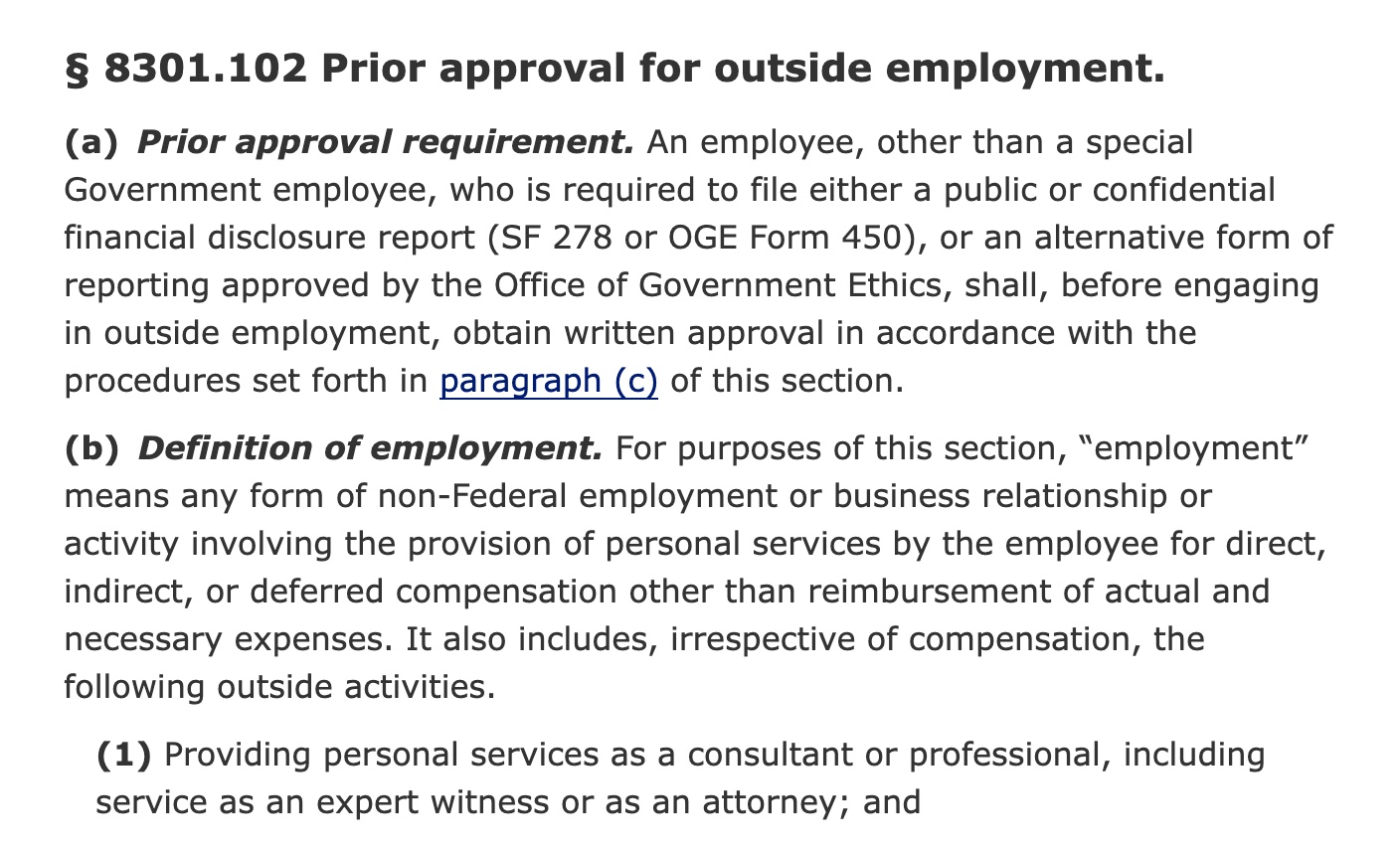
That's the key. The approval rule only hits employees who have to file a financial-disclosure report. Those are the forms senior officials and certain designated people fill out. A first-year seasonal firefighter almost certainly isn't one of them, so this gate doesn't apply to most folks in Graham's spot. Even so, it's a one-minute question for HR: "Am I required to file a financial-disclosure report?" Ask it instead of guessing.
Can you take photos and video out on the line? Yes
Graham takes a lot of photos out there, and I wondered if shooting on public forest land needed a permit, especially since he posts it. The rules changed recently. The EXPLORE Act of 2024 ties filming permits to group size and impact on the land, not to whether you're making money. Here's the exact language:
"The Secretary concerned shall not require an authorization or a permit or assess a fee ... for a filming or still photography activity that—(A)(i) involves fewer than 6 individuals; and (ii) meets each of the requirements described in paragraph (5) ..."
— EXPLORE Act of 2024, Sec. 125 (amending 16 U.S.C. § 460l-6d)
"Fewer than 6 individuals" means five or fewer. Paragraph (5) adds a few conditions: a spot where the public is allowed, minimal hand-carried gear, and no damage to the land. Meet those, and one person shooting phone photos on public forest land needs no permit.
Here's the catch. That's only about the permit to be out there with a camera. Whether you can sell that content is a separate question, and the ethics rules above still decide that — the EXPLORE Act doesn't override 2635.807. (Forest Service filming page and the Congressional Research Service summary.)
You can post on social media, just speak for yourself
The Forest Service even put out guidance on employees using personal social media. The gist: you can have a personal account that says you're an employee. You just have to speak for yourself, not the agency — they suggest a simple line in your bio like "views are my own, not my employer's." That's why Graham's Instagram is him sharing his own rookie season, not the Forest Service saying anything official.
One more thing worth knowing. Being seasonal doesn't get you out of any of this. These rules (5 CFR Part 2635) apply to every federal employee, including temporary and seasonal ones. The rules are the rules whether you're there for thirty years or one summer.
The bottom line
Here's the whole thing as a simple do / don't:
| Do | Don't |
|---|---|
| Post, build an audience, run a free newsletter, take photos | Take pay for job-related writing while you're employed |
| Work on it on your own time, with your own phone and laptop | Use a government computer, or do it on the clock |
| Talk honestly about the work | Use your title or badge to sell |
| Build a guide from public information | Lean on inside information |
| Wait until after the season to sell job-related work | Sell job-related work while you're on the payroll |
None of that is a real sacrifice. The paid guide is better anyway after Graham has done a full season — written from the whole thing, not the first two weeks. The careful answer and the better answer turned out to be the same answer.
If you're a city or structural firefighter instead, your department sets its own rules on outside work, so check those — these federal rules are a different system. But the tax side of any side income is the same for everyone: 1099 income, a Schedule C, mileage, and the home-office deduction. That's my world — I run a company built around exactly that — and we wrote the deep-dive here: side jobs for firefighters and the tax side.
One honest disclaimer
Everything above is what I found reading the regulations and the Forest Service's own guidance. It is not legal advice, and I'm not the guy to give you legal advice. Ethics rules have nuance, your situation may be different from ours, and your agency can have its own wrinkles on top of the government-wide rules.
The safe step, every time, is to talk to your own agency's ethics official before you start something. Every federal agency has one, and your HR office can point you to them. They're there for exactly this, and asking is free. I gave you the rules first because "just go ask" with nothing behind it isn't much help. Now you can go ask a smart question.
What we're doing about it
Here's where Graham and I landed. Graham is putting together a free guide on how to land a wildland firefighting job with zero experience. We're following his first season in real time here at woodlandfirefighter.com. That part is free, and you can sign up.
The paid guide — the full how-to-get-hired playbook, written after he's done a complete rookie season — comes out in the fall. Which, it turns out, is right where these rules pointed us anyway: write it on his own time, build it from public information, and sell it once the season's over and he's off the payroll.
FAQ
Can a wildland firefighter have a side job? Usually yes. The federal ethics rules (5 CFR Part 2635) don't ban outside work — they put limits on it. The big ones: don't get paid for job-related writing or speaking while you're employed, don't use your position for private gain, and use your own time and gear. Some employees who file financial-disclosure reports need approval first (5 CFR 8301.102), but a first-year seasonal firefighter usually isn't one of them. Check with HR.
Can federal employees make money on social media? You can run personal accounts and say you're an employee, as long as you speak for yourself and not the agency. The Forest Service even suggests a "views are my own" line in your bio. The money question comes back to the same rules. Don't use your title as a sales pitch, don't post inside information, and don't take outside pay for job-related content while you're still employed — sell that after the season instead.
Do I need a permit to post photos I took on the fire line? Under the 2024 EXPLORE Act, filming permits on forest land are based on group size and impact on the land, not on whether you're making money. If you're solo or in a small group of five or fewer, in public areas, with hand-carried gear and no damage, you need no permit. Whether you can sell that content is a separate question, and the ethics rules cover that.
Can I sell a guide about getting hired while I'm still employed? This is the riskiest one. Under 5 CFR 2635.807 you can't take outside pay for writing tied to your government job while you're still employed, and a "how to get hired" guide likely counts. The clean fix is to wait and sell it after the season, once you're off the payroll, when the rule no longer applies. And always check with your agency ethics official first.